Beautiful Plants For Your Interior

Most people mix up sound absorption and sound insulation, thinking that soundproof materials can solve all noise problems, only to waste money in the end. If you want to eliminate indoor noise, echo and reverberation, acoustic panels are the core solution you need.
This complete guide takes you from beginner to expert. We will fully explain what acoustic panels are, their mainstream types, and how to choose the right one for different scenarios. After reading this article, you will get rid of all selection confusion and master acoustic panel purchasing easily!
Let’s first correct a common misunderstanding among 90% of people: Sound absorption ≠ Sound insulation.
Sound insulation works to “block sound transmission” and keep outdoor noise out. In contrast, acoustic panels focus on absorbing indoor reflected sound, echo and reverberation, reducing indoor noise superposition and making indoor sound clearer and cleaner. Simply put: sound insulation stops outside noise; sound absorption calms the inside space.
An acoustic panel is a functional decorative board designed for indoor acoustic optimization. With porous, loose, fibrous or micro-hole structures, it converts sound wave energy into heat energy for dissipation, effectively reducing indoor echo, roaring sound and ambient noise.
Its biggest advantage is dual functionality: acoustic performance & decorative value. Unlike traditional bulky and unattractive acoustic materials, modern acoustic panels feature diverse styles and easy installation. They perfectly solve noise problems while beautifying spaces, ideal for homes, offices, meeting rooms, home theaters, KTVs, schools, live-streaming rooms and more scenarios.
Core functions of acoustic panels:
Different acoustic panel materials vary greatly in sound absorption performance, environmental friendliness, appearance, price and applicable scenarios. Below are the most widely used and cost-effective types for your reference:
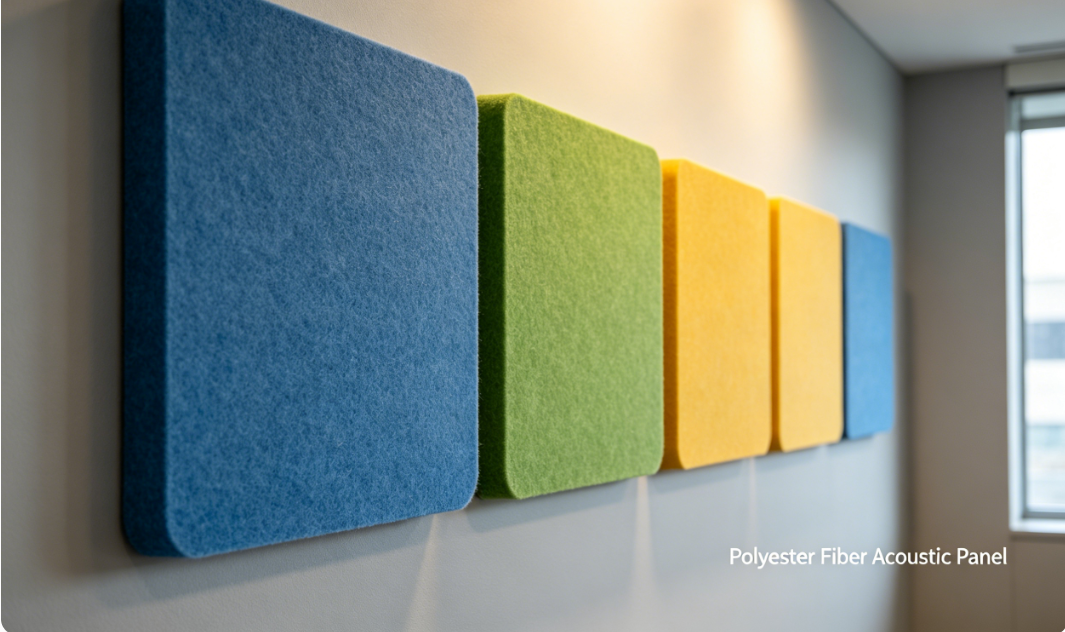
As the most versatile option for residential and commercial projects, polyester fiber acoustic panels are the best-selling acoustic panels on the market. Made of high-density polyester fiber through thermal compression, they feature a porous fiber structure with stable and reliable sound absorption performance.
Advantages: Eco-friendly and odorless, high flame retardancy, rich colors and styles, lightweight and easy to install, freely cuttable and shapeable, excellent absorption for medium and high-frequency sound, affordable price with high cost performance.
Disadvantages: Limited rigidity, not suitable for complex wall modeling, relatively weak low-frequency sound absorption effect.
Applicable Scenarios: Bedrooms, children’s rooms, offices, meeting rooms, live-streaming rooms, classrooms, small home theaters.
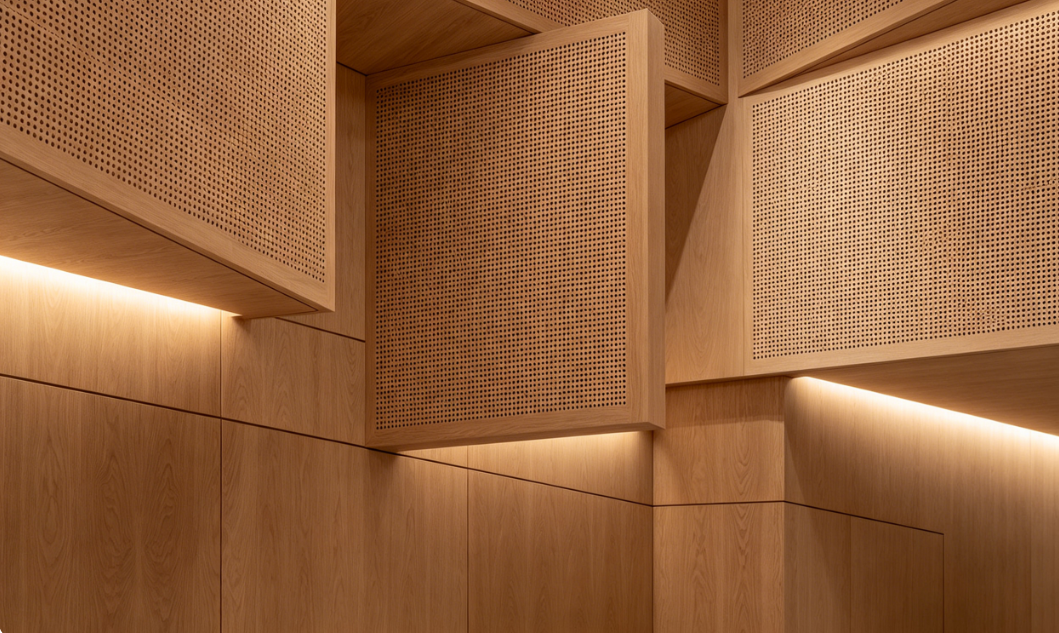
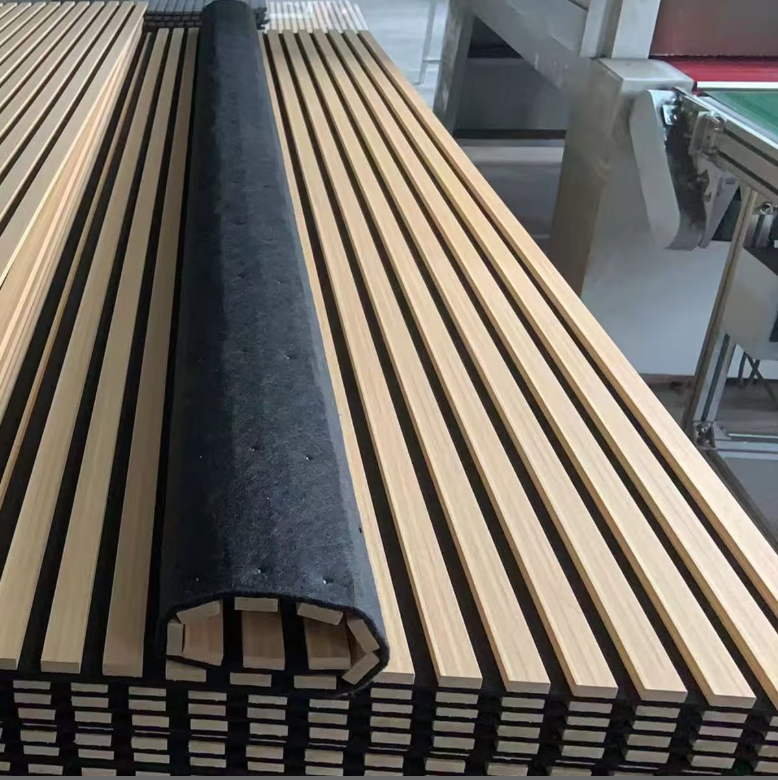
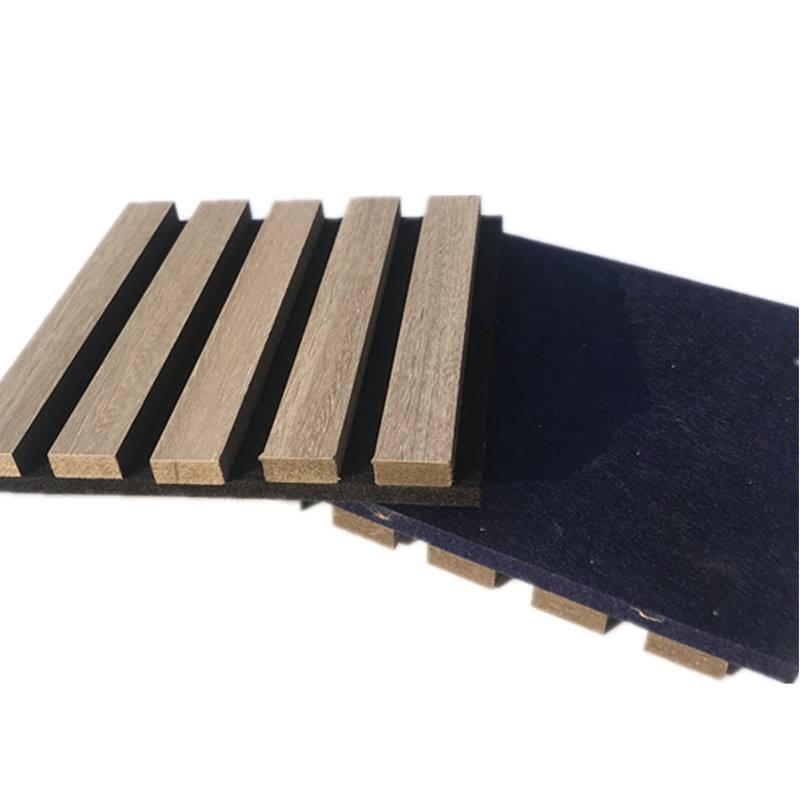
Wooden acoustic panels include perforated wooden panels and slotted wooden panels. Made of solid wood or density board with professional micro holes and grooves, they achieve excellent acoustic effects through cavity structure design and are classic high-grade acoustic materials.
Advantages: Premium wood texture and texture, strong decoration, stable acoustic structure, balanced absorption for high and low-frequency sound, wear-resistant, durable, moisture and moth proof.
Disadvantages: Higher price, heavier weight, complicated installation process, low-quality products may have excessive formaldehyde.
Applicable Scenarios: Hotel lobbies, lecture halls, auditoriums, large conference rooms, concert halls, villa home theaters.