
Beautiful Plants For Your Interior

Compare SPC vs WPC flooring to find the true industry leader. Learn key differences, durability, and best uses for stone plastic floors.
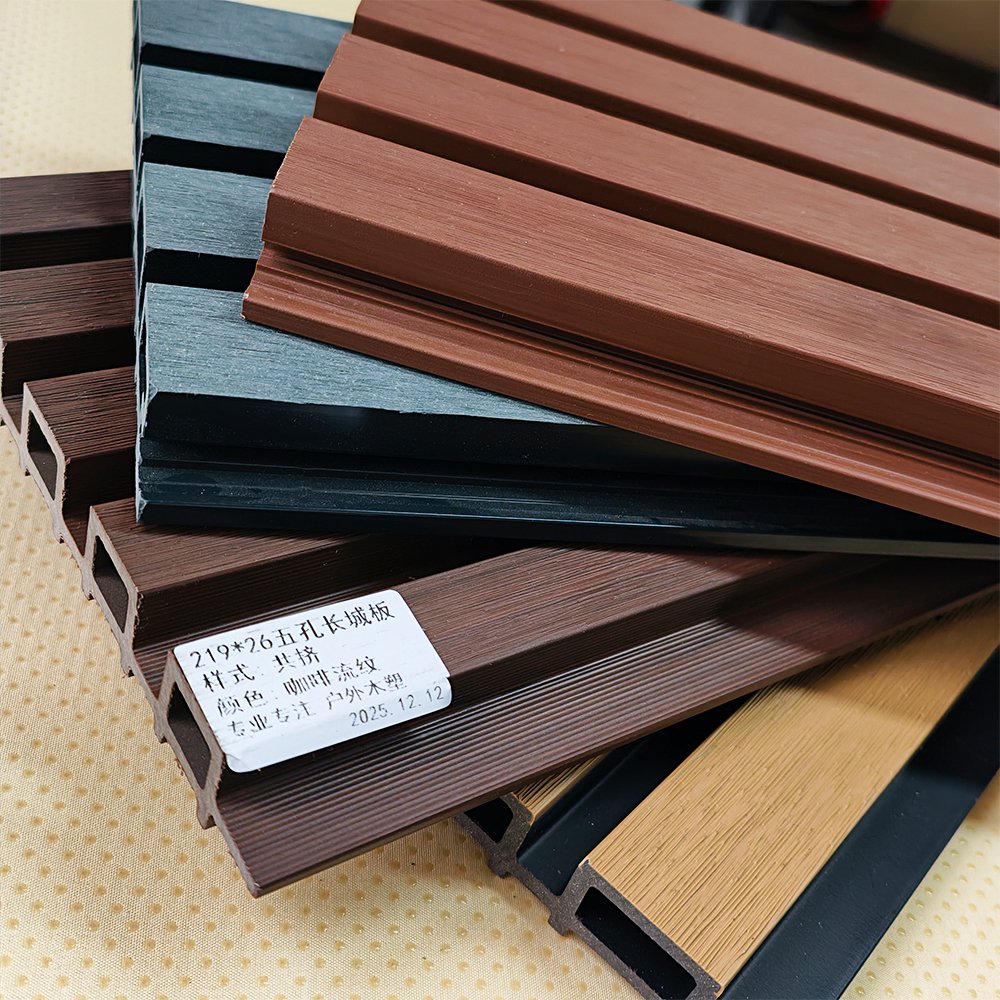
In the current flooring market, SPC (stainless steel composite flooring) and WPC (wood-plastic composite flooring) are often confused. Although both are touted as “new environmentally friendly flooring,” their underlying product logic and application scenarios are actually quite different. As someone who has long worked on the export front lines, today I want to break down these two products clearly, from production processes to practical durability, to help you avoid some pitfalls when choosing them.
I. Fundamental Differences in Core Structure: SPC Flooring vs. WPC Flooring SPC flooring is jokingly referred to as “Solid Man” in the industry because its core substrate is made from stone powder, polyvinyl chloride (PVC), and stabilizers through high-pressure extrusion. This structure has extremely high physical density, feels heavy, and its main selling point is its “hardness.” WPC, on the other hand, incorporates a foaming agent during production, resulting in a honeycomb-like micro-foamed structure within the substrate. If SPC is like solid brick, then WPC is more like a slightly resilient hardwood, offering a warmer feel underfoot, but its density is correspondingly lower than SPC.
II. Durability Test: A Battle Between Indentation and Impact Resistance In terms of durability, the two brands have completely different focuses. SPC, due to its extremely hard substrate, boasts near-perfect resistance to indentations from heavy objects; even prolonged pressure from heavy furniture rarely leaves noticeable dents. However, WPC, due to its foamed structure, while superior in cushioning and noise reduction, is more prone to indentations from sharp, heavy objects or prolonged pressure from overly heavy furniture. If you’re installing SPC in a high-traffic shopping mall or office, it’s definitely more worry-free; but for a comfortable bedroom or living room, the responsive feel of WPC will make you feel your money’s worth.
III. Thermal Stability in Extreme Environments: Which is More Sensitive to Heat? This is a crucial consideration in export trade. SPC flooring, due to its high stone powder content, has a near-zero thermal shrinkage rate. This means that even in regions like Russia where winter heating is on full blast or where temperature differences are extreme, it maintains dimensional stability and is less prone to warping and cracking. In contrast, WPC, containing foaming agents, is slightly more sensitive to temperature. Although current manufacturing processes have greatly improved shrinkage, SPC remains the optimal industrial solution for stability under extreme temperature conditions.
IV. Production Process and Cost Logic From the factory perspective, SPC has higher production efficiency and relatively controllable raw material costs, so it often offers a highly competitive price-performance ratio in the market. WPC’s production process is relatively complex, and the foaming process is more difficult to control, which results in its ex-factory price usually being a level higher than SPC. Therefore, the high-end products you see on the market that emphasize foot feel and wood texture are mostly WPC; while SPC dominates the market for large-scale commercial projects and high-cost-performance residential projects.
V. Summary: Which should you choose for your project? Don’t just look at the price when choosing flooring. If your project has a limited budget and you have a strong need for wear resistance, pressure resistance, and fire resistance (e.g., rental properties, offices, gyms), then go for SPC without hesitation. However, if you’re doing high-end villa customization, or if your clients are very concerned about the comfort of walking barefoot and have sound insulation requirements, then the premium feel of WPC is something SPC can’t provide.
